Walk into any property discussion with a Telugu family and Vastu will come up within the first five minutes. It's not superstition, it's a system of thought that generations have used to create homes that feel balanced, well-lit, and in harmony with the land around them. Most families don't treat Vastu as a rigid rulebook. They treat it as a practical guide, something to consider alongside title documents, location, and budget, and that's the spirit this article is written in.
Why Vastu Still Matters for Plot Buyers
Vastu Shastra is an ancient Indian system for designing spaces that align with natural forces, sunlight direction, wind flow, and the energy of the surrounding land. For a plot buyer, Vastu considerations start even before construction begins, the shape of the plot, which road it faces, and the slope of the land all factor in before a single brick is laid.
For many Telugu families, a Vastu-compliant plot means peace of mind. It reduces friction within the family during the buying decision, and it tends to matter again at resale time, buyers in Hyderabad frequently ask about plot facing and shape.
Plot Shape: What to Look For
The shape of a plot is one of the first things a Vastu consultant will ask about. The traditional guidance is clear on what works well and what to approach with caution.
| Plot Shape | Vastu View | Practical Note |
|---|---|---|
| Square | Excellent | Ideal for any home layout. Equal energy in all directions. |
| Rectangle (longer North-South) | Very Good | Most common in planned layouts. Works well for family homes. |
| Rectangle (longer East-West) | Good | Acceptable. Works with careful internal layout planning. |
| Slightly irregular | Caution | Many families accept small irregularities if other factors are strong. |
| L-shaped or T-shaped | Avoid | Missing corners are considered problematic in Vastu. |
| Triangular | Avoid | Difficult to use efficiently and not preferred. |
Most HMDA-approved gated community plots in Hyderabad are rectangular by design, which is why they appeal to families with Vastu preferences right from the start.
Road Facing: The Direction Question Every Family Asks
Which direction the main road faces is probably the most common Vastu question plot buyers ask. Here is the traditional hierarchy most Telugu families follow, along with the practical reality.
East-Facing Plot
This is the most preferred facing in Vastu. The main entrance opens towards the rising sun, which is considered auspicious and energising. Morning sunlight enters the home naturally, reducing dampness and improving the feel of the space. East-facing plots are in steady demand and tend to command a slight premium in Hyderabad's plotted communities.
North-Facing Plot
The second most preferred direction. The north is associated with Kubera, the deity of wealth, in Vastu tradition. Good natural light enters through the north, and the home stays cooler in Hyderabad's summers since the south sun doesn't directly hit the main facade. Highly sought after, especially by families with strong Vastu awareness.
West-Facing Plot
Generally considered acceptable. The afternoon sun enters from the west, which can make west-facing rooms warmer, but this is manageable with good architectural planning. Many families in Hyderabad have built perfectly comfortable homes on west-facing plots.
South-Facing Plot
Often avoided due to Vastu concerns, though many Vastu consultants point out that south-facing plots are perfectly fine if certain remedies are followed during construction, like placing the main entrance to the left of centre rather than directly centre-south. That said, resale can be harder with south-facing plots since many buyers rule them out at the search stage.
Land Slope: Often Overlooked, Always Important
Vastu has clear guidance on slope and it happens to align well with practical drainage and construction wisdom too.
- Slope towards North or East: Considered the best. Water flows away from the building in a direction considered auspicious, and construction is typically easier.
- Slope towards South or West: Generally avoided in Vastu. Also practically problematic, water tends to accumulate near the building foundation, which creates maintenance issues over time.
- Flat plot: Neutral and acceptable. Easy to work with architecturally.
Always check the natural slope during your site visit, particularly during or just after the rainy season when you can observe actual water flow patterns.
Surroundings: What to Check Around the Plot
Vastu pays attention not just to the plot itself but to what sits around it. Here are the checks experienced families run before finalising a plot.
- Temple directly opposite the main entrance: Generally considered inauspicious in Vastu. A temple to the side is fine.
- T-junction plot (road ending at the plot): Called a "Veedhi Shoola", traditionally avoided as the energy of the road is considered to be directed straight at the home.
- Large tree directly in front of the plot: Blocks morning sunlight and is considered Vastu-unfavourable.
- Open land to the North or East: Considered positive, allows free flow of morning sunlight and open energy.
- Graveyard, hospital, or industrial unit nearby: Avoid, both for Vastu reasons and practical quality-of-life reasons.
- Water body (lake, pond) to the North or East: Generally considered auspicious and adds practical value too.
Plot Extensions: The Corner Rules
Vastu assigns positive or negative significance to each corner of a plot. A plot with an extended corner (more land jutting out) in certain directions is seen as lucky; a cut corner in those same directions is seen as a loss.
- Extension in North-East (Ishanya corner): Considered highly auspicious, associated with prosperity and well-being.
- Extension in South-West: Generally avoided, seen as creating instability.
- Cut in North-East corner: One of the most cautioned-against features. Many families rule out a plot immediately if the north-east corner is cut.
How Experienced Telugu Families Actually Decide
The families who have bought multiple properties over the years, and there are many such families in Hyderabad's airport corridor, tend to take a balanced approach. They have a preferred direction and shape in mind, but they don't walk away from a genuinely good plot purely on Vastu grounds if everything else checks out.
The practical checklist they run alongside Vastu is:
- Clear title with no encumbrances, verified independently at the sub-registrar
- RERA registration active and matching the developer name
- HMDA or DTCP layout approval in place
- Road access confirmed, both the main road and the internal approach road
- Water and power availability on site or with a confirmed timeline
- Neighbourhood development pattern, are other families building here or is it still empty?
A plot that ticks all the legal and practical boxes but has a west-facing road is usually considered better than an east-facing plot with title disputes. Vastu guides the preference; legal clarity protects the investment.
Vastu in Gated Communities
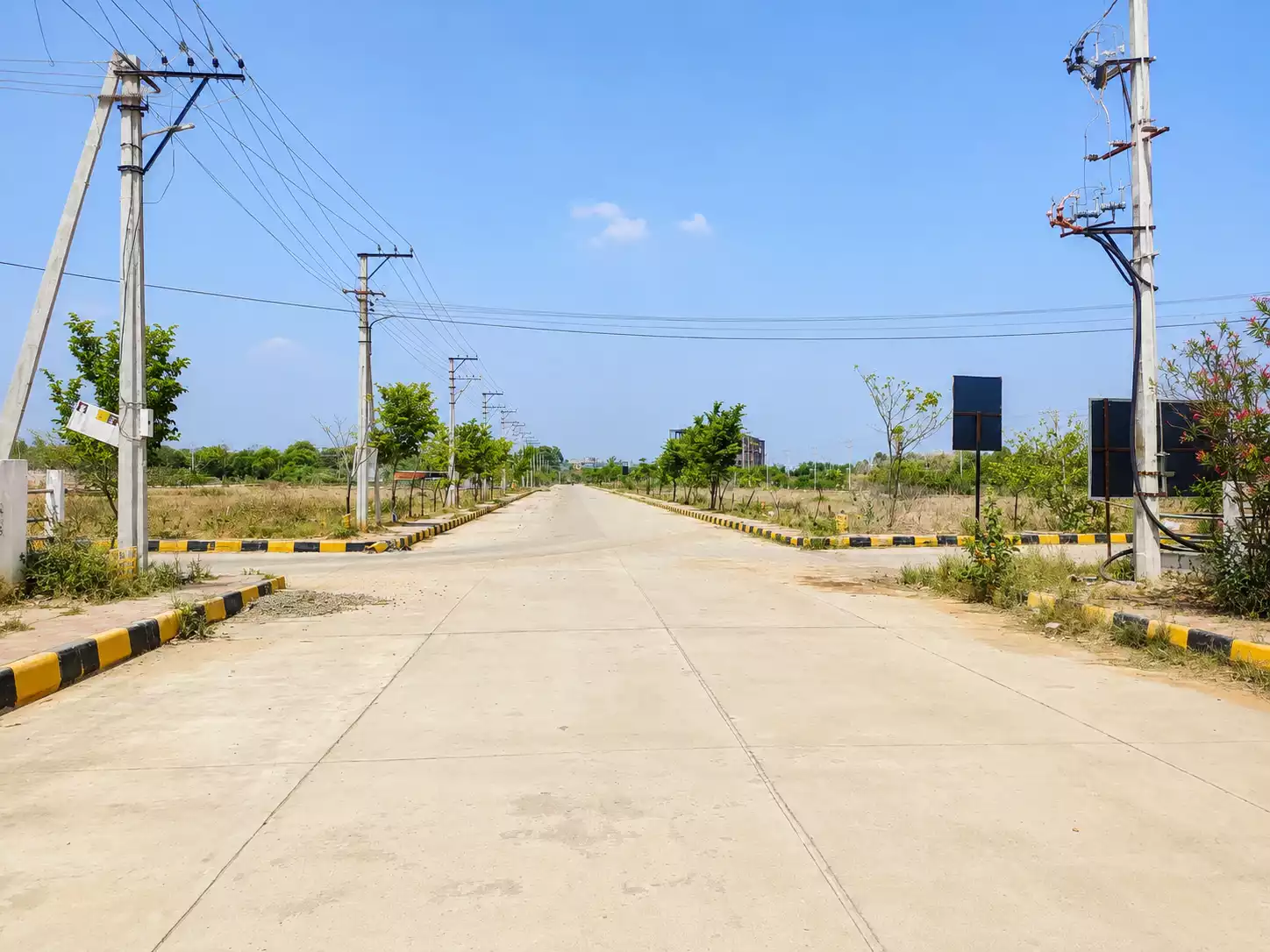
One advantage of buying in a well-designed gated community is that the developer has typically considered plot orientation during layout planning. Roads often run north-south and east-west, which means a good proportion of plots will have east or north-facing main access. Internal roads are planned, trees are placed thoughtfully, and irregular corners are minimised.
When visiting any KLR Projects community, our team can walk you through individual plot orientations and help you identify which plots match your Vastu preferences. It's worth asking specifically, different plots within the same layout can vary significantly in facing and surroundings.